
GARBAGE IN, GARBAGE OUT
Garbage
• The household waste or rubbish produced in our day-to-day life is calledgarbage.
• Garbage includes spoilt food, vegetable peels, leaves, wood, grass, paper, leather, cotton, cattle
dung, metals, fibre, paper, rubberetc.
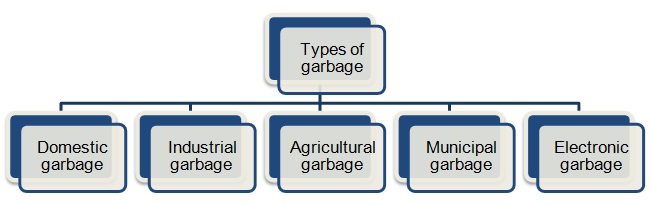
Components of Garbage

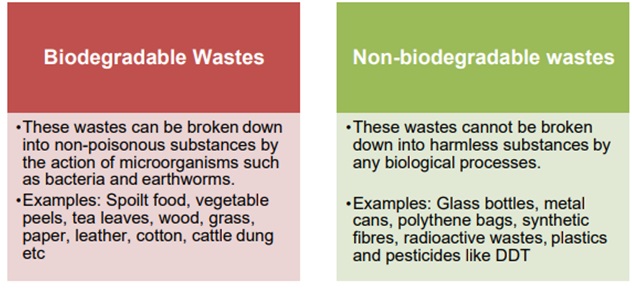
Biodegradable and Non-biodegradable Wastes
Disposal of Garbage
• Disposal of garbage means to get rid ofgarbage.
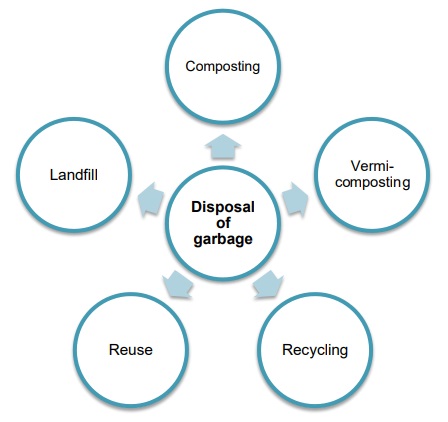
Methods of Disposal of Garbage
Composting
• The rotting and conversion of organic waste into manure is known as composting. The product formed
after composting is calledcompost.
• Household garbage such as fruit and vegetable peels, egg shells, waste food, tea leaves as well as farmland
wastes such as dried leaves, husk and parts of crop plants from fields after harvesting can all be converted
into usefulcompost.
• The use of compost improves the fertility of the soil as it provides nutrients to thesoil.
• Dry composting toilets are a hygienic and cost-effective solution to dispose of humanwastes.
• A major drawback of composting is that due to lack of adequate knowledge most people do not segregate
wastes in their homes which hampers the process ofcomposting.
Vermicomposting
• The method which involves the use of worms to decompose wastes is calledvermicomposting.
• The product formed after vermicomposting is calledvermicompost.
• Earthworms can degrade or decompose wastes such as domestic waste, cow dung, coconut thresh etc. in a fewdays.
• The manure generated through vermicomposting is highly nutritious and useful for good growth of garden plants
and even for agriculturalpurposes.
• Making vermicompost is quitecheap.
• Vermicompost is a natural manure which does not harm thesoil.
• Vermicomposting is a very valuable technique for converting solid waste into useful compost or manure.
Recycling
• Separation of waste materials from refuse and then reprocessing them for reuse is known as
reclamation of waste orrecycling.
• Most waste materials such as scrap metals, paper, rubber, synthetics, glass and plastic can be reused.
• Waste paper is sent to paper mills where it is repulped and reprocessed to form new paperagain.
• Waste materials such as glass can be crushed, remelted and made into newcontainers.
Reuse
• Reuse means not to throw old goods away, but to use the same goods again andagain.
• The demand for new goods is reduced due toreuse.
• Forexample:
1. Plastic jars of jams, pickles, oils, ghee etc. can be reused for storing salt, spices, sugaretc.
2. A diary can be made from old invitationcards.
Landfill
• Large-scale disposal of solid waste is carried out by putting the waste in low areas of the ground
and then covering it with earth. This is called alandfill.
• Landfill is one of the traditional methods used to dispose of hazardous waste and is mainly practised in urbanareas.
• Landfill uses a large amount of land and very often produces a foulsmell.
• If wastes such as batteries etc. are dumped in a landfill, then toxic substances percolate into the earth
and pollute thegroundwater.
Green-coloured bins:
The waste like stale food, fruit and vegetables peels, and garden litter collected in the green-coloured bins.
• Blue-coloured bins: Recyclable waste like plastic, metal and glass are collected in the blue-coloured bins.
• Red-coloured bins: Toxic waste materials like syringes, expired medicines and batteries are collected
in the red-coloured bins.
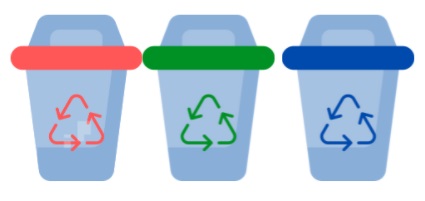
Figure 5: Waste Segregation.
Plastics - Boon or Curse?
• Plastic is an organicpolymer.
• A large number of items such as bags, bottles, toys, buckets, combs, water pipes as well as parts of radios,
television sets, automobiles, refrigerators etc. which we use in our day-to-day life are made of plastic.
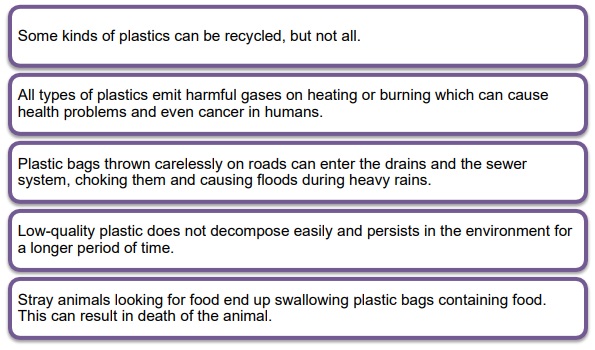
Problems due to Excessive Use of Plastics
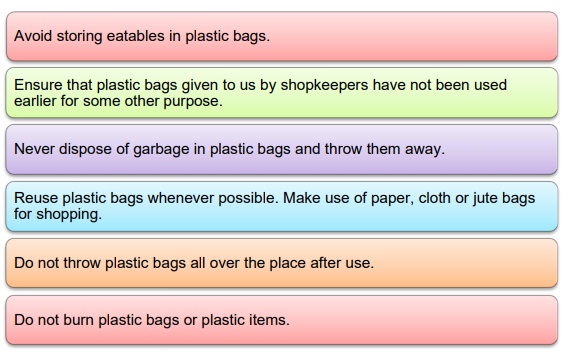
Efforts to Minimise the Use of Plastics
• Bioplastics are a form of plastic which are made from renewable biomass sources such as plants
like potatoes, corn starch, pea starch, vegetable oils or other agricultural products owing to the
action of certainmicroorganisms.
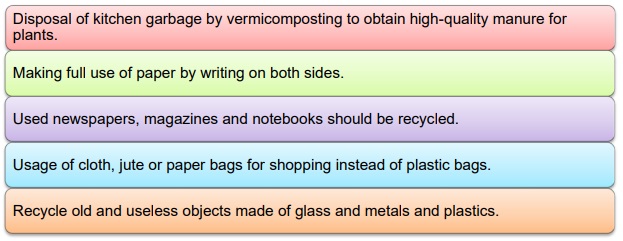
Some of the Ways to Reduce the Generation of Garbage
Toxic Wastes
The waste released from harmful substances such as expired medicines, syringes, and batteries is called toxic waste.
These wastes are harmful because of their cancer-causing ability. Moreover, these substances carried by the water into
the water bodies that are consumed by the animals and plants disturb the food chain cycle.
Doing Away from Plastic Bags
In ancient times, plastics were widely used all over the planet. On the contrary, the overuse of plastics creates a serious
problem because they can emit harmful toxic gases like dioxins while burning, which can increase the risk of causing cancer.
Therefore, the maintenance of plastic bags becomes important. We can handle and manage plastic bags in the following ways:-
• We should use reusable bags instead of plastic bags.
• Collect the plastic bags at a specific location where they can be recycled easily.
• Reuse the plastic bags as far as possible many times before disposing of them.
• Use plastic bags only when reusable bags are not available.
