
Homonyms and Homophones
What are Homonyms and Homophones?
• In English, words which share the same spelling and pronunciation but have differentmeanings are known ashomonyms.
• Similarly, words which share the same pronunciation but have different spellings and meaningsare known ashomophones.
• Both the terms are derived from the Greek root words homo, nymandphone.

Examples of Homonyms
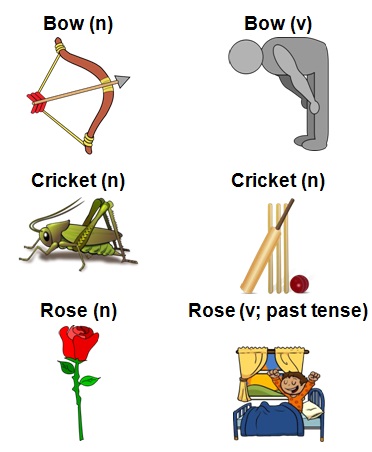
Examples of Homonyms in Sentences
1. Mala did not batan eyelid.
1. The batflew into the room.
2. The cat will lieon the rug.
2. I dislike people who lie.
3. The landlord was a meanperson.
3. He did not meanto hurt his friend.
4. Stalksof wheat swayed in the fields.
4. The hapless woman realised she was being stalkedby a stranger.
5. I leftmy purse in Mrs Mishra’s house.
5. The spectators seated towards the leftwere very boisterous.
Examples of Homophones
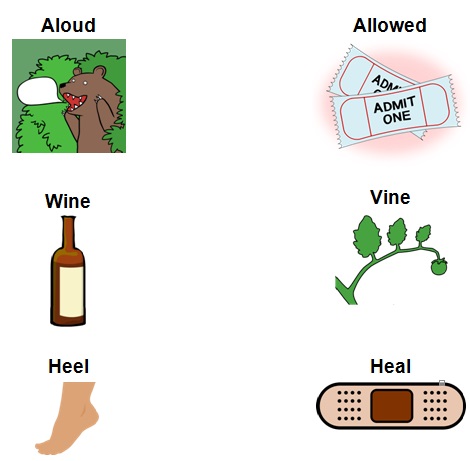
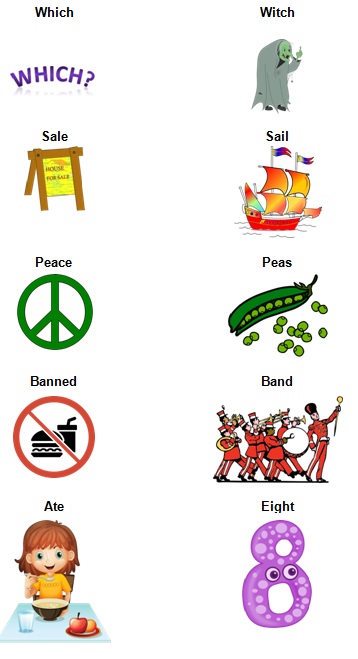
Examples of Homophones in Sentences
1. Acceptthis flower as a token of my gratitude.
1. Exceptfor a few mistakes, Rahul’s work is flawless.
2. The old lady breaksthe twig into half.
2. The car swivelled around when its brakesfailed.
3. The cat tiptoed on its paws.
3. The lawyer spoke after a long pause.
4. There are no sellersavailable at this moment.
4. Many of these old colonial style houses are equipped with cellars.
5. The lone sheep strayed away from its herd.
5. I heardwhat you said.
6. The master strategist used his wilesagainst the evil assassin.
6. It took us a whileto realise that we were heading in the wrong direction.
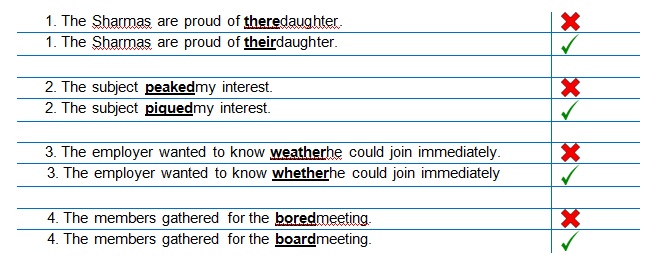
Commonly Confused Homophones
Idioms, Phrases and Proverbs
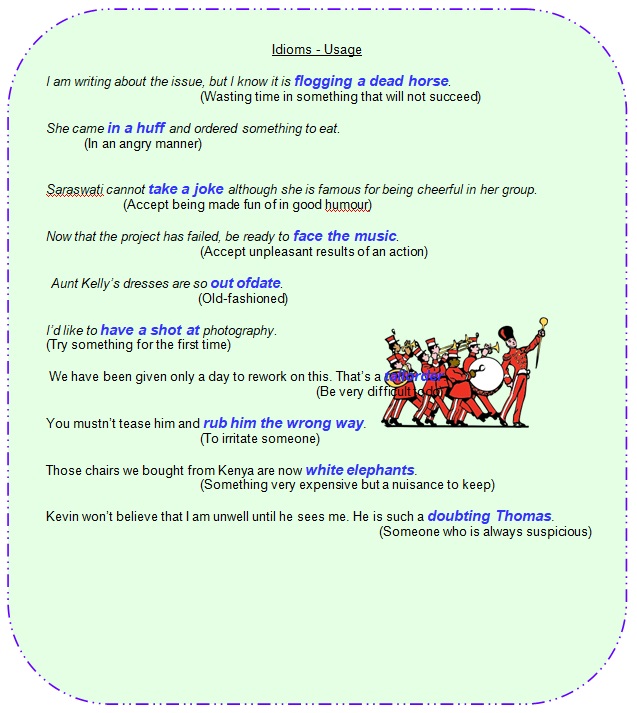
What are Idioms and Phrases?
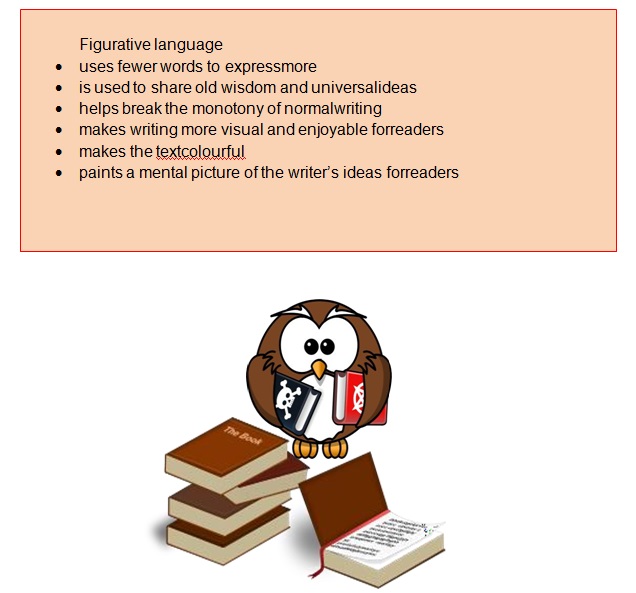
In English, idioms, phrases and proverbs are used to enhance written and spoken communication.
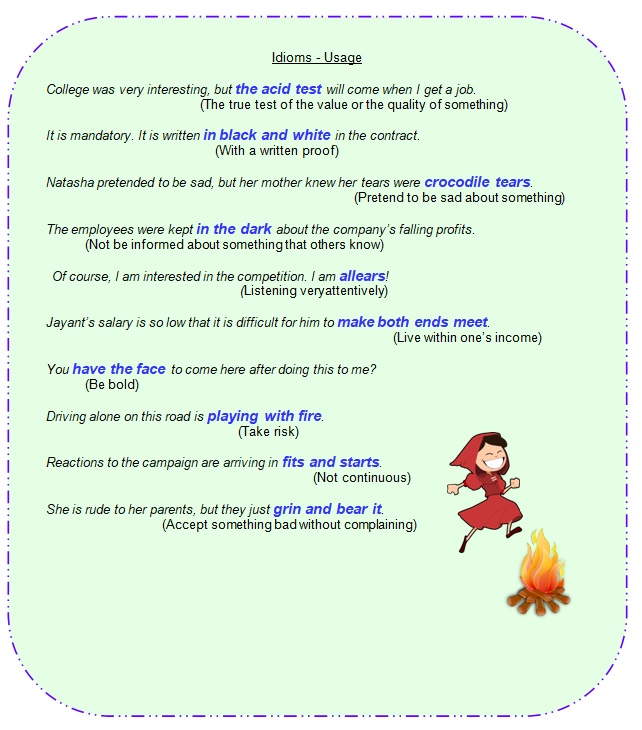
• An idiom is a phrase whose figurative meaning is different from its literalmeaning.
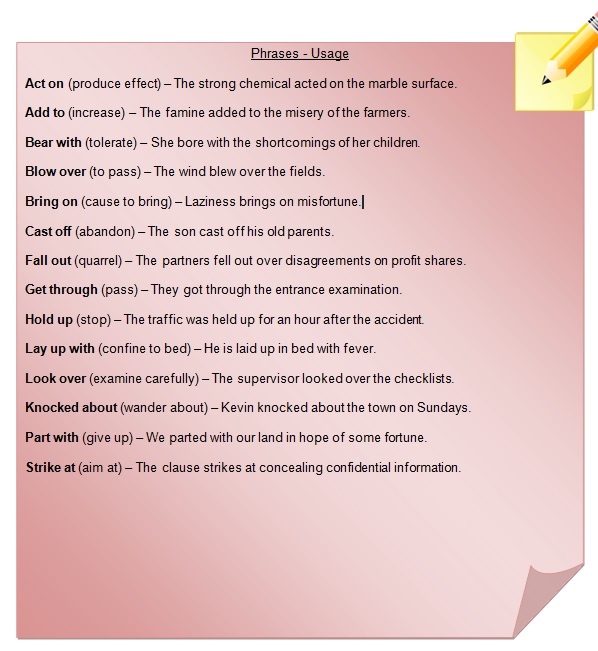
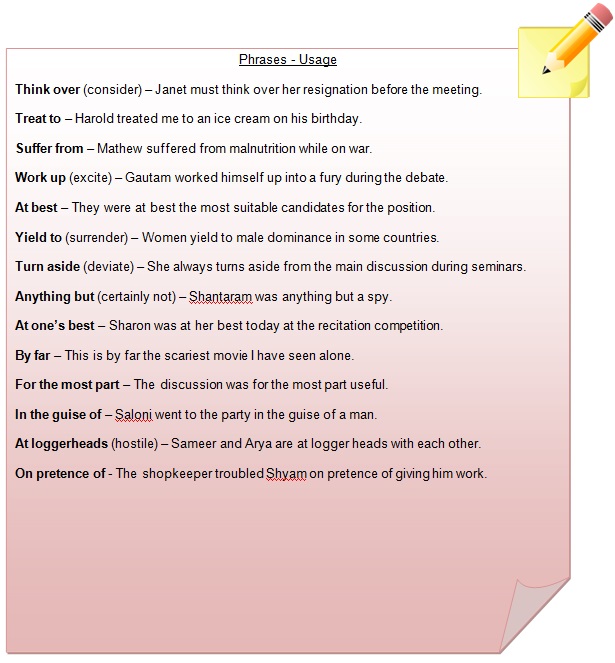
• A phrase can be a combination of a verb and an adverb, a verb and a preposition, and a verbwith
an adverb and apreposition.
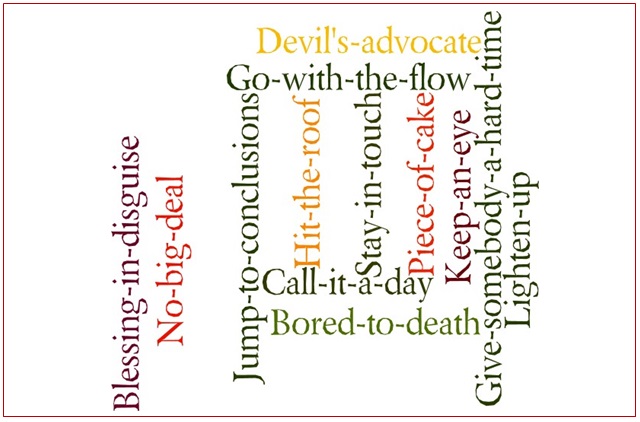
• Both idioms and phrases can have literal and figurativemeanings.
• The only way to learn idioms and phrases is by reading about them and using them as muchas youcan.
Let us look at some phrases and idioms.
What are Proverbs?
A proverb is a simple statement based on facts and experiences which expresses truth and gives advice on life.
You may have heard several proverbs in your moral science class. Let us read some proverbs and understand
their meanings.
Fortune favours the brave.
Luck is more likely to be with those who take risks.
Don’t count your chickens before they are hatched.
You shouldn’t plan how to utilise good results of something before those results have occurred.
Honesty is the best policy.
Even if it may be useful to tell a lie, you should always tell the truth.
Slow and steady wins the race.
Constant and regular work leads to better results.
Empty vessels make the most noise.
People who have little knowledge usually talk the most and make the greatest fuss.
There is no such thing as a free lunch.
Things which are offered free always have a hidden cost.
God helps those who help themselves.
Work hard to achieve your goals. Don't just wait for good things to happen to you.
Practice makes perfect.
You have to practice a skill a lot to become good at it.
Beauty is in the eye of the beholder.
Different people have different ideas about what's beautiful.
Necessity is the mother of invention.
When you are really in need, you think of creative solutions to your problems.
A chain is only as strong as its weakest link.
If one member of a team doesn't perform well, the whole team will fail.
Why Use Idioms, Phrases and Proverbs?
Prefix and Suffix
English Affixes
• In any language, the system responsible for building vocabulary by affixing groups of words to root
words or base words is known as the affixationsystem.
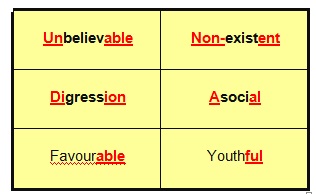
• This system is made of prefixes, suffixes, root words and basewords.
• The knowledge of English affixation offers us a systematic and effective way of expandingour vocabulary
without having to remember a large number of words at atime.
• Though many words in English do not have affixes (chair, bag, horse, time), there are manyothers which
do (return,demonstration,undo).
• English borrows heavily from languages such as Latin andGreek.
• Most of the word roots in English can be traced back to these twolanguages.
• Through this chapter, we will learn the common prefixes, suffixes and root words which constitute English.